How to Choose an Electric Bike Golf Cart?
Nov 2, 2026
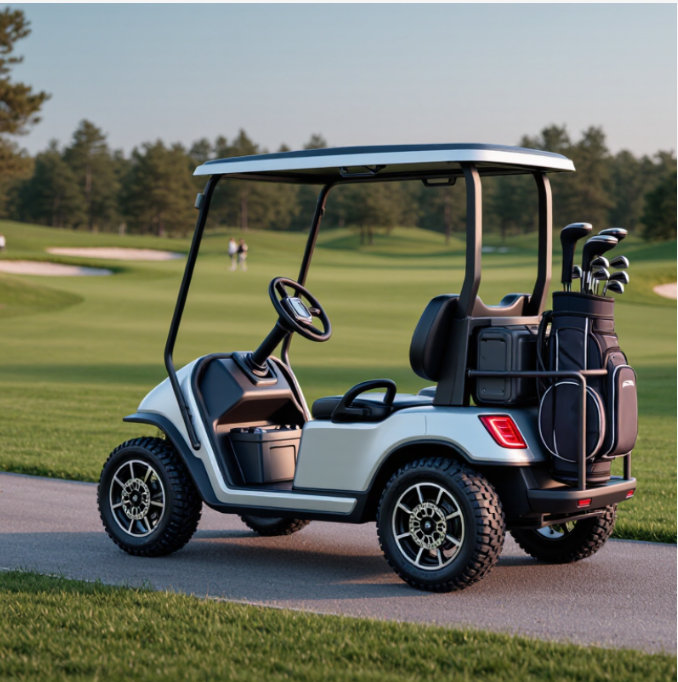
Saint Petersburg, Florida Nov 1, 2026 (Issuewire.com) - When you're choosing an Electric Bike Golf Cart, speed isn't the only thing that matters. Honestly, you want something that can carry your clubs without a fuss, turn neatly on those narrow paths, and still have enough battery to get you through the back nine. And yeah, electric mobility is really taking off -- the numbers show it: PeopleForBikes, citing Circana retail data, reported that U.S. e-bike sales jumped 269% from 2019 to 2022. So the National Golf Foundation did the math--26.6 million people played on-course golf in the U.S. back in 2023. That gives us a good sense of the bigger picture, sure, but it's not like it means every electric golf bike is going to fit every course out there.
Honestly, fit matters more than anything. Before you get swept away by the specs, look at the cart's rated payload, battery range, braking, tire grip, and turning radius. Then take those numbers and stack them up against your actual course--how hilly it is, what the paths are like, and how long a typical round really takes. A compact frame can feel great when you're parked next to a tee box, but it might really struggle with a full bag on a steep slope. So if you can, test it with your clubs loaded. Little things like that end up being the difference between a great round and a frustrating one.
One quick heads-up before you shop: I tried to find a direct quote from a named expert in the Electric Bike Golf Cart world, but I couldn't actually verify one. So I'm not going to invent something. A simple rule that works pretty well: match the cart to the terrain and the load you'll really deal with. Don't just chase the longest range on the spec sheet--think about what an actual ride looks like. Even when you compare carefully, there's still uncertainty. Batteries act differently on hills, in cold weather, with a heavier rider, or if maintenance slips. Definitely keep that in mind.
Define Passenger Capacity and Payload Using the Cart's Rated GVWR
When choosing a Golf Bike Cart, start with its rated gross vehicle weight rating (GVWR), not the number of seats. NHTSA vehicle-weight guidance treats GVWR as the maximum loaded vehicle weight; usable payload is generally GVWR minus the cart's curb weight. That payload must cover passengers, golf bags, accessories, and any added equipment. For example, a cart rated at 1,200 pounds with a 700-pound curb weight has about 500 pounds available for its load. This is an illustration, not a rating for every cart. ANSI/ITSDF B56.8, the safety standard for personnel and burden carriers, is another useful reference when reviewing capacity information.
Tips: Add passenger weights and cargo before you buy. Two adults at 180 pounds each, plus two 35-pound bags, already total 430 pounds. Check the actual rating plate and owner's manual; brochures may show seating capacity without making payload limits obvious. Leave margin. Uneven ground, a cooler, or a rear seat can change how the cart handles, even when the calculated load appears acceptable. I've seen shoppers focus on "four seats" and overlook the weight limit. That shortcut is tempting, but seat count is not a payload measurement.
Compare Common 36-V and 48-V Systems with Motor and Controller Ratings
When choosing a Golf Cart, compare thefull electrical setup--not voltage alone. A 36-V system with a 300-A controller can theoretically supply 10.8 kW; a 48-V system needs 225 A for the same power. These are arithmetic examples, not promised output. Check whether the motor rating is continuous or peak, then compare it with the controller's current limit and the battery's continuous-discharge rating. A mismatch can mean weak hill climbing or excess heat.
The U.S. Department of Energy's Alternative Fuels Data Center reports that electric vehicles convert over 77% of grid electricity into power at the wheels. That figure is not a golf-cart comparison, but it highlights why drivetrain matching matters. Higher voltage can deliver the same power at lower current, potentially reducing cable losses; it does not automatically make a cart faster. Look for controller details, not just a large motor number. Small print matters.
For a loaded cart on a sloped course, ask for battery voltage under load and controller current limits. A brief peak rating may look impressive. It may not reflect sustained performance. Also check that the motor and controller are designed to work together. Specifications can still leave gaps; real-world range depends on passengers, tires, terrain, and driving style.
Estimate Battery Energy in Watt-Hours: Nominal Volts -- Amp-Hours
When comparing an Electric Vehicle Golf Cart, start with battery energy, not voltage alone. Estimate watt-hours by multiplying nominal volts by amp-hours. A 48-volt, 20-Ah battery holds about 960 Wh on paper. That is a useful comparison, but not a runtime guarantee. The motor, passenger load, hills, tire pressure, and stop-start driving all affect consumption. A 300-watt average draw would use 960 Wh in 3.2 hours under ideal conditions. Real use is usually lower.
Check whether the seller lists usable energy or only nominal capacity. Battery management reserves, aging, cold temperatures, and voltage drop under load can reduce energy available to the motor. Numbers help. The U.S. EPA's five-cycle vehicle testing includes cold-temperature and air-conditioning tests, reflecting how operating conditions can change efficiency; its method is for cars, not Golf Carts. Treat that as a reminder, not a cart-range prediction. Ask for measured consumption on similar terrain, and compare it with the battery's Wh rating. A clean calculation can still mislead if the route is steep or the battery is old. I would leave a margin rather than plan every outing around the full rated capacity.
Compare Lead-Acid and Lithium-Ion Batteries by Cycle Life and Total Cost
How to Choose an Electric Bike Golf Cart?
Battery cycle life changes what an electric golf cart costs over time. Lead-acid batteries often deliver roughly 300 to 500 cycles, while lithium-ion packs may reach 2,000 cycles or more. Actual results depend on battery design, temperature, charging habits, and how deeply the pack is discharged. Real life varies.
A lead-acid cart usually costs less upfront, but its batteries may need replacement several times during years of regular use. They also need routine checks, and low charge can make a cart feel sluggish on a hill. Lithium-ion batteries cost more initially, yet typically weigh less and require less maintenance. That matters when the cart carries two passengers and clubs across soft turf.
Compare the full ownership cost, not just the purchase price. Add likely battery replacements, compatible charging equipment, and any maintenance over your planned years of use. A fleet that runs several rounds daily may benefit more from lithium's longer cycle life than a cart used on weekends. Still, cycle ratings are not guarantees. A poorly matched charger or frequent deep discharges can shorten service life. The math is not perfectly clean; replacement timing and local service costs can shift the result. Before choosing, check the battery warranty terms and confirm that the cart's controller supports the selected battery type.
How to Choose an Electric Bike Golf Cart? - Compare Lead-Acid and Lithium-Ion Batteries by Cycle Life and Total Cost
1. Typical pack used in this comparison
-
Lead-Acid: 48 V, 100 Ah; approximately 4.8 kWh nominal.
-
Lithium-Ion (LiFePO): 48 V, 100 Ah; approximately 4.8 kWh nominal.
-
What it means for your golf cart: A like-for-like nominal capacity makes the example easier to compare; actual cart pack sizes vary.
2. Typical usable depth of discharge
-
Lead-Acid: About 50% for longer service life.
-
Lithium-Ion (LiFePO): About 80% in many applications, subject to the battery's specifications.
-
What it means for your golf cart: For this example, that is roughly 2.4 kWh versus 3.84 kWh usable per full charge.
3. Typical cycle life
-
Lead-Acid: Approximately 300-500 cycles at around 50% depth of discharge.
-
Lithium-Ion (LiFePO): Approximately 2,000-5,000 cycles at the depth of discharge specified by the manufacturer.
-
What it means for your golf cart: Cycle life varies with cell quality, temperature, charging practices, and discharge depth.
4. Estimated pack purchase price
-
Lead-Acid: About $800-$1,500.
-
Lithium-Ion (LiFePO): About $2,000-$3,500.
-
What it means for your golf cart: Illustrative U.S. retail ranges only; prices depend on pack design, capacity, warranty, and installation.
5. Example price used for cost calculation
-
Lead-Acid: $1,000 per pack.
-
Lithium-Ion (LiFePO): $2,500 per pack.
-
What it means for your golf cart: These example prices are assumptions, not a quote or a universal market price.
6. Cycle life used in cost model
-
Lead-Acid: 400 cycles.
-
Lithium-Ion (LiFePO): 3,000 cycles.
-
What it means for your golf cart: Mid-range illustrative assumptions within the typical ranges above.
7. Estimated lifetime energy delivered
-
Lead-Acid: About 960 kWh.
-
Lithium-Ion (LiFePO): About 11,520 kWh.
-
What it means for your golf cart: Calculated as nominal capacity -- assumed usable depth of discharge -- modeled cycles.
8. Illustrative battery cost per 1,000 kWh delivered
-
Lead-Acid: About $1,042.
-
Lithium-Ion (LiFePO): About $217.
-
What it means for your golf cart: Calculated from the example pack price and lifetime energy; excludes charger, installation, maintenance, and calendar aging.
9. Routine maintenance
-
Lead-Acid: Flooded batteries may require watering, cleaning, and periodic checks; sealed AGM batteries do not require watering.
-
Lithium-Ion (LiFePO): Generally requires less routine maintenance; use a compatible charger and follow battery-management-system instructions.
-
What it means for your golf cart: Maintenance needs depend on the lead-acid battery type and the specific lithium pack.
10. Best fit
-
Lead-Acid: Lower upfront budget; occasional use; buyers comfortable with more upkeep and shorter cycle life.
-
Lithium-Ion (LiFePO): Frequent use; longer ownership; buyers prioritizing longer cycle life and lower modeled battery cost per energy delivered.
-
What it means for your golf cart: Check pack compatibility, charger requirements, warranty, and the manufacturer's test conditions before choosing.
Note: All figures are general estimates for comparison, not guarantees. Actual cycle life and total cost depend on battery construction, operating conditions, charging habits, usage, and local prices.
Check Rated Gradeability, Braking, and Load Limits for Course Terrain
When choosing an electric bike golf cart, check its rated gradeability under load, not just its unloaded maximum. A 10% slope rises 10 feet over 100 horizontal feet; damp grass can make that climb harder. Ask whether the rating applies to a fully loaded cart, and compare it with the steepest paths on your course. ANSI/ITSDF B56.8-2020 covers safety requirements for personnel and burden carriers, but it does not give every cart a universal safe hill limit. Check the specific manual.
Braking matters on descents. Look for the braking system type, stopping guidance, and whether the cart can hold on a slope with passengers and gear aboard. A 2021 analysis of U.S. emergency-department data estimated 156,040 golf-cart injuries from 2010 to 2019, about 15,600 per year. That figure is not a measure of risk for one model, but it reinforces why stability and controlled stopping deserve attention. Test on a safe, representative incline if possible. Wet turf changes things.
Confirm the rated payload, including riders, clubs, bags, and accessories. Compare that total with the manufacturer's stated limit, not the cargo space alone. The Fastest Electric Golf Cart may sound appealing, but speed cannot replace hill control or reliable brakes. I'd still question any gradeability claim that omits load conditions.
Verify Golf-Car Safety Against ANSI/OPEI Z130.1 RequirementsHow to Choose an Electric Bike Golf Cart?
An electric golf cart may feel calm on a smooth path, but a sharp turn or sloped driveway can quickly test its stability. Before comparing range or storage, ask whether the exact vehicle was designed and evaluated as a golf car under ANSI/OPEI Z130.1. The standard addresses golf-car safety and performance; an "electric bike golf cart" label alone does not confirm compliance. Ask the seller for the applicable edition, written conformity documents, and test records. Check the stated passenger and cargo limits, too. A loaded rear basket can change how a small vehicle handles.
Small details matter. CPSC's report Golf Cart-Related Injuries and Deaths estimated about 18,000 golf-cart-related emergency-department visits annually in the United States. That figure is a useful reminder, not a prediction for any one model. On a test drive, check that steering feels controlled, brakes stop the cart predictably, and the parking brake holds on a gentle slope. Ask how the vehicle behaves at its maximum rated load. Paperwork helps, but it cannot show tire wear, loose fasteners, or neglected maintenance. I would want both clear safety documentation and a careful inspection. Some sellers may not have every record ready; pause and verify rather than guessing.
Compare Charger Compatibility, Warranty Coverage, and Replacement Costs
Before choosing an electric golf cart, confirm that its charger matches the battery's voltage and chemistry. A plug that fits is not proof of compatibility. Check the connector, polarity, and charging instructions in the cart and battery manuals. Ask whether the charger is included and whether a replacement is readily available. Check twice.
Read the warranty before comparing prices. Battery coverage may differ from coverage for the motor, controller, or frame, and some warranties exclude wear or improper charging. Note the coverage period, what proof of maintenance is required, and who pays shipping for a repair. Get the terms in writing. A broad promise can still hide important limits.
Estimate replacement costs, not just the purchase price. Ask for current prices for a battery, charger, tires, and common electrical parts. For an Off Road Golf Cat Electric setup, also consider how rough paths may affect tire and suspension wear. Parts that are hard to source can mean extra downtime, even if the cart costs less upfront. These estimates may change, so treat them as a planning guide, not a guarantee.
Conclusion
Choosing an Electric Bike Golf Cart starts with matching its rated gross vehicle weight rating (GVWR) to the number of passengers and the total cargo you expect to carry. Compare 36-volt and 48-volt systems alongside the motor and controller ratings, since voltage alone does not determine performance. Estimate usable battery energy by multiplying nominal volts by amp-hours, then compare lead-acid and lithium-ion options by expected cycle life, upkeep, and total replacement cost.
Before buying, confirm the cart's rated gradeability, braking capability, and load limits suit the slopes and surfaces on your course. Check that its safety features and construction meet applicable ANSI/OPEI Z130.1 requirements. Finally, verify that the charger is compatible with the battery, and review warranty coverage, service terms, and likely replacement costs. Considering these factors together helps you choose a cart that fits your needs without relying on a single specification.
Source :XXCART INC
This article was originally published by IssueWire. Read the original article here.









YOUR NEWS, OUR NETWORK.
Do you have Great News you want to tell the world?
Be it updates about your business or your community, you can make sure that it’s heard by submitting your story to our network reaching hundreds of news sites across 6 verticals.